
Fees & tools
Instant convert vs order book: compare what you actually receive
Compare an instant conversion quote with a spot order using the same total spend. Check fees, available depth, partial fills, and net assets received without counting costs twice.
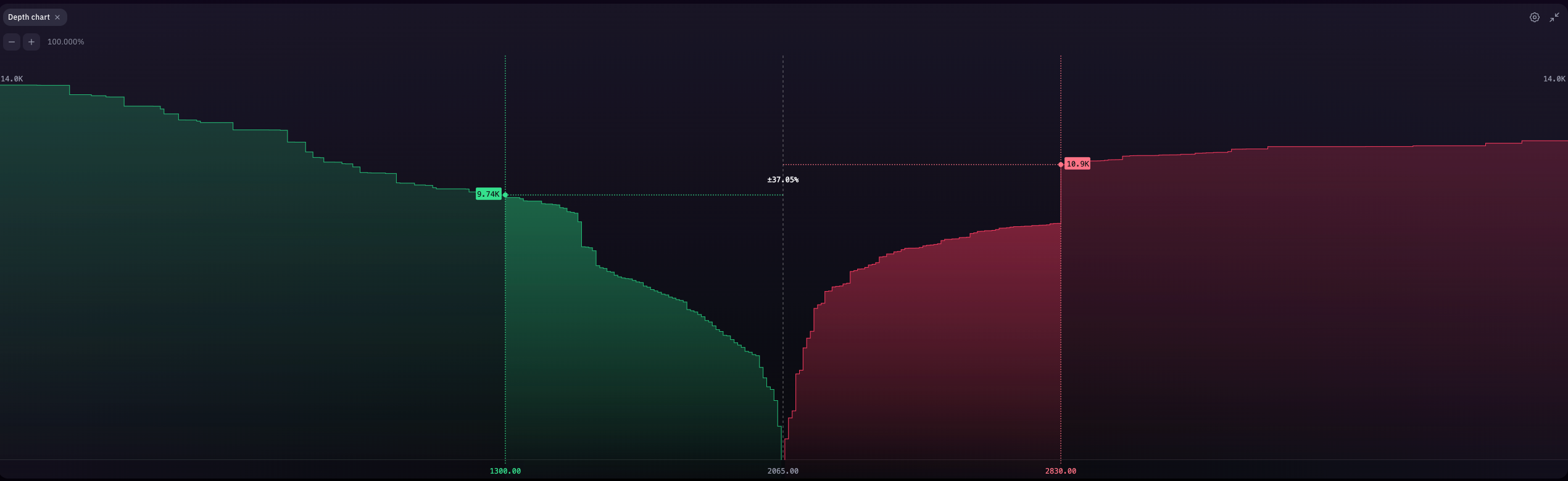
Instant convert vs order book: which gives you more of the asset you want? There is no reliable list of coins that are always cheaper through one method. Compare the exact pair, amount, payment balance, and time. For the same total spend, the useful number is the net amount received after charges, alongside the risk that an order does not fill as expected.
This guide is for someone who has already decided to make a spot conversion and wants to check its execution cost. It does not rank assets to buy or recommend a trade.
A conversion quote and an order book show different things
An instant conversion presents an exchange rate or receive amount for you to review. That rate can include a spread, and a separate fee may also apply. Coinbase documents a spread in its simple conversion rates and says its preview shows the total payment including applicable charges. Its Advanced product uses the order book without that added quotation spread. Source: Coinbase pricing disclosures.
That does not mean an order book has no bid–ask gap. The best bid is a buyer's offered price; the best ask is a seller's requested price. A buy that takes available liquidity meets the asks. The difference between these prices is a market feature, distinct from a provider's spread inside a conversion quote.
Kraken similarly documents a displayed fee and, where applicable, a spread for Instant Buy, Sell, and Convert. It identifies size, asset, payment method, and market conditions as factors. A fee comparison therefore needs the actual preview, not a general “zero fees” label. Source: Kraken instant purchase FAQ.
Which assets or situations deserve a closer comparison?
Use these as checks, not fixed recommendations by coin name:
| Your situation | What to compare before choosing |
|---|---|
| A direct spot pair exists for your starting balance | Compare its executable prices and your fee tier with the conversion's net receive amount. |
| The direct spot pair has little visible depth | Inspect quantities beyond the best price. A low headline trading fee does not establish a low total cost. |
| Reaching the asset on spot would require an intermediate asset | Include both trades, both sets of charges, and any balance left over. Do not compare a complete conversion with only the first spot leg. |
| The amount is small | Check each product's minimum order size and permitted quantity increments before comparing prices. |
| The amount exceeds the size near the top of the book | Treat the top quote as insufficient evidence for the whole order; inspect deeper levels. |
| You can wait for a chosen price | Compare a limit order separately from immediate execution, because an unfilled order has not delivered the asset. |
A thin market is not proof that instant convert solves the problem. Kraken says low liquidity can also prevent it from producing an instant quote. If neither route provides a usable quote for your amount, waiting is a valid outcome of the comparison.
Compare the same spend without placing two trades
First write down the starting currency, target asset, and maximum total debit. Use an existing balance for both previews where possible. Comparing a card-funded purchase with a balance-funded spot order mixes payment costs with execution costs.
- Open the conversion preview. Record the amount paid, net amount received, separate charges, and any quote expiry. Do not confirm merely to collect a comparison.
- Open the exact spot pair. Check the pair's direction: buying the base asset uses the ask side, while selling it uses the bid side. Confirm that you are viewing spot rather than a leveraged or derivatives product.
- Inspect enough depth for the intended amount. A single best-price row may cover only part of it. Read how to include slippage in the spot cost if the difference between a displayed price and a fill is unfamiliar.
- Apply the fee that actually fits. Check your account's current tier, the pair, and whether execution would be maker or taker. Keep the fee currency beside the amount.
- Put both results on the same basis. If charges are added to the payment, reduce the order amount to keep the total debit equal. If they are deducted from the asset received, compare the remaining quantity. If a third asset pays fees, include its value consistently in both totals.
- Refresh before acting. An expired conversion quote and a later order-book snapshot are not simultaneous alternatives. Keep spot estimates labelled as estimates until execution.
Your comparison note only needs these fields: time, route, total debit, net receive amount, fee currency, and whether the result is a quote, estimate, or completed fill. You can collect this information without making a test purchase.
Read the screenshot by quantity, not just price
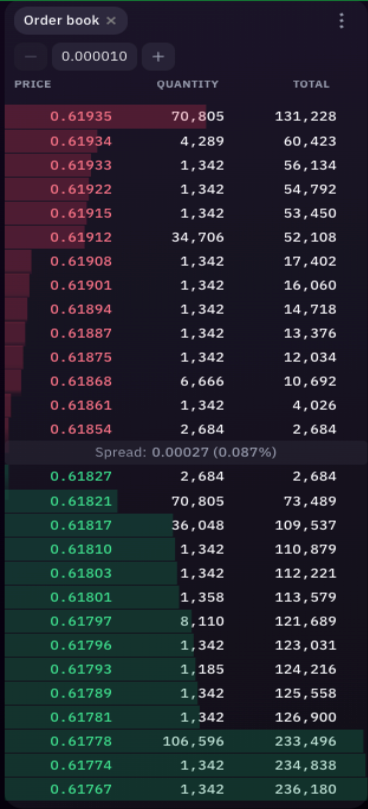
Official interface screenshot from the Kraken Pro trading interface guide, checked October 12, 2026. It illustrates the fields, not current prices or a recommended market.
The Quantity column shows size at a price level. The cumulative Total helps you see how much is available across successive levels. For an immediate purchase, inspect the sell side rather than assuming the largest number in the header is your execution price. Kraken's guide also explains that price grouping changes how much of the book is visible.
The same official guide's depth chart shows cumulative orders across price levels. Displayed liquidity is a snapshot and may change before execution.
Do not add the spread twice
For a completed purchase, a practical comparison is:
Effective acquisition price = total payment, including separately paid charges ÷ net asset quantity received.
Keep units consistent. The result is payment-currency units per unit of the acquired asset. A lower number means a lower acquisition cost for that comparison; it says nothing about whether the asset is a good investment.
If you calculate spot cost from the actual prices and quantities filled, the effect of crossing the book is already in that payment. Do not add another generic spread percentage. Likewise, when a conversion's total debit and net receive amount already incorporate its spread and fee, subtracting them again understates what you receive.
The midpoint between best bid and ask can be a reference, but it is not necessarily an available execution price. A difference from that midpoint alone is not a complete bill.
A limit order is a price boundary, not a completed saving
A buy limit order sets the highest execution price you accept. It can remain unfilled or fill only partly. A market order can execute across several prices, so the first displayed price is not a promise for the entire amount. Source: Coinbase Advanced order types.
Do not automatically assign a maker fee to every limit order. Coinbase explains that immediately matched quantities pay taker fees; quantities that rest and later match can pay maker fees. Check when maker and taker fees apply before putting a rate into your comparison. Source: Coinbase Advanced fees.
If a limit order fills only partly, preserve both the filled amount and the remaining order status. Before switching to a conversion, check for an open remainder and confirm any cancellation. Otherwise, the original order could still fill after you complete the second route.
Verify the result in the transaction record
After a trade you independently choose to make, replace estimates with the actual debit, credit, fees, and fill status. Include any unspent balance rather than treating it as a charge. Compare only completed, equivalent amounts; a partially filled order needs its own explanation.
If a Kraken instant purchase appears in the app but not in a Trades CSV, check which ledger export contains instant buys before assuming the transaction is missing.
The decision is ready when you can explain what leaves your balance, what arrives, which charges are already included, and what remains uncertain about execution. If one of those is unknown, retain the comparison as an estimate rather than declaring one route cheaper.